Understanding PSA Blood Testing
The prostate-specific antigen (PSA) test measures the level of PSA in your blood, a protein produced by the prostate gland. While elevated PSA levels can be associated with prostate cancer, they can also be caused by non-cancerous conditions such as an enlarged prostate or inflammation.
The test is a useful tool in identifying potential issues early, but results should always be interpreted alongside your symptoms, medical history and where necessary, further investigations.
What Could Affect My PSA Level?
Various factors can impact PSA levels like vigorous exercise, prostate stimulation, urine infection (UTI or prostatitis) and benign conditions like benign enlargement. They may also be affected by recent prostate procedures, including biopsy, as well as other causes of lower urinary tract symptoms.
Understanding PSA Test Results
Interpreting your PSA test results involves more than just numbers. Raised PSA levels don't conclusively indicate prostate cancer, nor do normal PSA levels guarantee its absence.
A normal PSA level is usually determined to be between 1-4ng/ml. However, this range might shift when considering age, the size of the prostate gland and other health conditions.
PSA levels tend to rise with age. Here's an adjusted breakdown based on age:
Age PSA level
- Between 40 and 49 more than 2.5ng/ml
- Between 50 and 59 more than 3.5ng/ml
- Between 60 and 69 more than 4.5ng/ml
- Between 70 and 79 more than 6.5ng/ml
However, any value significantly higher than the average for their age group might warrant further medical evaluation.
PSA Levels and Risk of Prostate Cancer
PSA readings can offer insights into your risk of prostate cancer:
- Below 2.5ng/ml: Approximately a 15% chance of prostate cancer.
- 2.6 - 10ng/ml: Risk increases to 25%.
- 10 - 19.9ng/ml: Around a 50% chance of prostate cancer.
- 20ng/ml and above: The risk rises to 75% or higher.
While elevated PSA levels can indicate an increased risk of prostate cancer, they don't confirm its presence. Other conditions, like an enlarged prostate or prostate infection, can also elevate PSA levels.
How Can Dr. Calleja Help?
Dr. Edward Calleja is a Consultant Urologist based in the South East of England. He provides care to both NHS and private patients, specialising in PSA testing, prostate cancer diagnosis and the assessment of prostate health.
If you are struggling to understand your PSA test results Dr Calleja will carry out a comprehensive evaluation of your symptoms and PSA results, taking into account factors that can influence PSA levels. Where appropriate, this may include further investigations such as repeat blood tests, MRI scans, or biopsy to ensure an accurate diagnosis.
Book an online consultation to discuss your PSA results and prostate concerns in more detail and explore the most appropriate next steps for you.
Frequently Asked Questions
Is PSA a reliable test for prostate cancer screening?
While invaluable, the PSA test is not infallible. The National Institute for Health and Care Excellence (NICE) highlights the necessity of combining PSA testing with other methods, like digital rectal examinations and MRI scans, for better accuracy.
How often should I check the PSA?
Regular PSA testing is crucial for early prostate cancer detection. Though there's no UK national screening programme for prostate cancer using PSA tests, men over 50 are entitled to a test after discussing it with their GP. Prostate Cancer UK suggests a PSA test every few years, depending on individual risk factors and PSA levels.
To conclude, PSA testing remains an instrumental tool in the fight against prostate cancer in the UK.
Can cycling cause a high PSA test?
Cycling, particularly long-distance or vigorous cycling, can increase PSA levels in some men. The reason is primarily due to the pressure exerted on the prostate gland from the bicycle seat, leading to a temporary rise in PSA.
- Duration and intensity matter: Not every short, leisurely bike ride will elevate PSA levels. However, more prolonged, intense cycling sessions, especially those lasting several hours, are more likely to have this effect.
- Temporary Rise: The increase in PSA due to cycling is usually temporary. Levels typically return to baseline within 48 hours.
- Recommendation: If you're a regular cyclist and are due for a PSA test, you should refrain from cycling for at least 48 hours before the test to ensure accurate results.
Can ejaculation cause a high PSA test?
Ejaculation can lead to a transient increase in PSA levels. A lot of the seminal fluid comes from the prostate gland. Ejaculation raises prostatic activity, which could cause a short-term rise in PSA levels in the blood.
- Short-lived Effect: The elevation in PSA levels post-ejaculation is generally short-lived, with levels usually returning to normal within 24 to 48 hours.
- Variability: While some studies have noted this effect, the increase isn't always significant and might vary among individuals.
- Recommendation: To be safe, many doctors recommend that men abstain from ejaculation for 24 to 48 hours before undergoing a PSA test to ensure the most accurate reading.
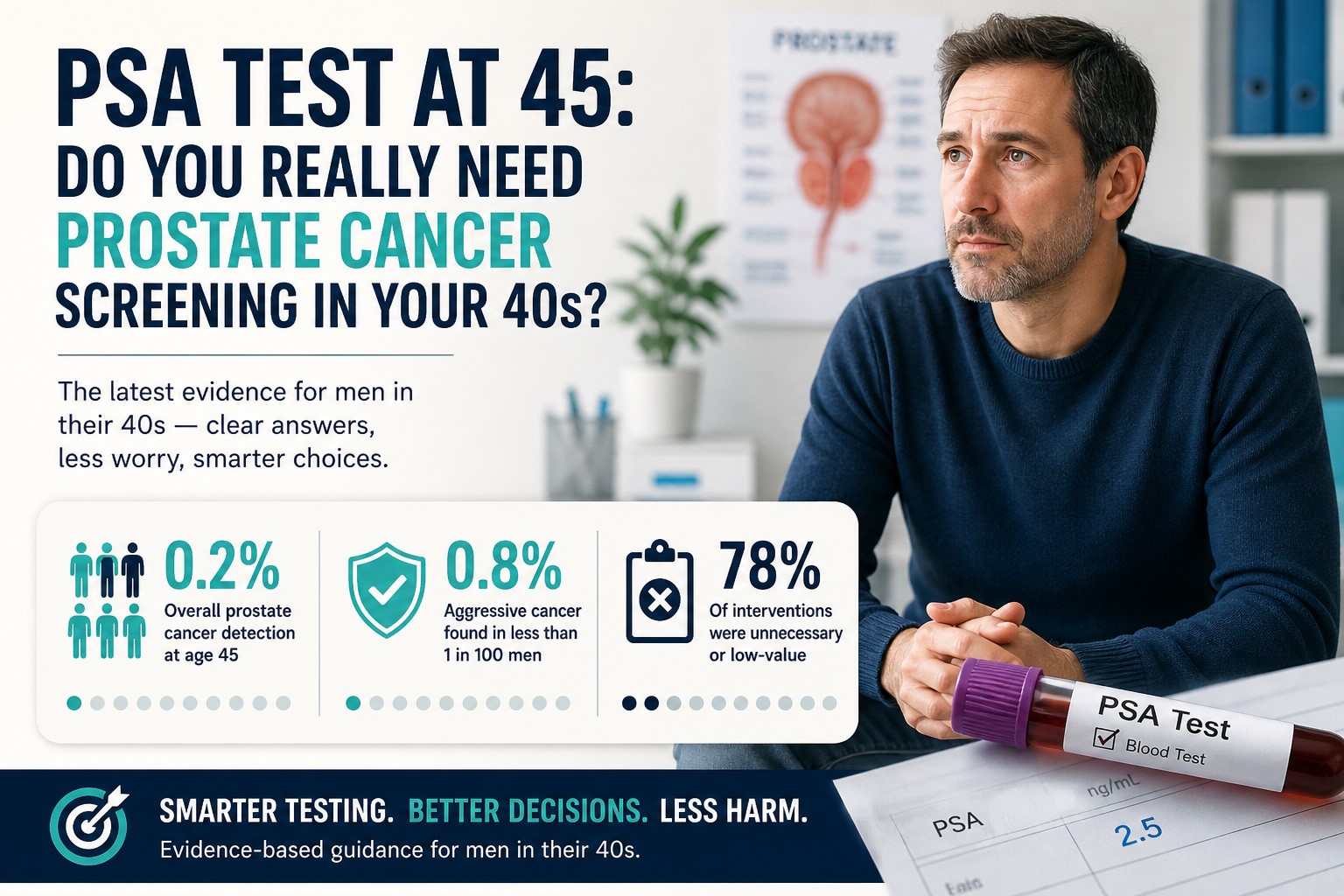
I am 45 years, can I do a PSA?
When screening for prostate cancer using the PSA test, the age at which a man should begin testing remains controversial among medical professionals. However, new research and clinical insights are showing that starting PSA testing at a younger age, around 45 years old, may have benefits.
- Baseline Reading: Undertaking a PSA test at 45 allows men to obtain a baseline reading. This baseline can be crucial in tracking PSA changes over time, helping to identify abnormal increases that may hint at prostate cancer or other prostate-related conditions.
- Higher Risk Groups: Men with a family history of prostate cancer or those of African or Caribbean descent are at a higher risk of developing prostate cancer at a younger age. For these individuals, early testing can be even more crucial.
What if my GP won't give me a PSA blood test?
In the UK, any man over 50 has the right to a PSA test if he carefully considers the advantages and potential drawbacks. This decision is based on the National Institute for Health and Care Excellence (NICE) guidelines. If your GP hesitates, it's usually due to valid concerns about the test's accuracy or potential implications.
However, engaging in an open dialogue with your GP is essential. Discuss your risk factors, family history, and any symptoms you might be experiencing. If you still feel that a PSA test is right for you after this discussion and your GP remains reluctant, you can consider seeking a second opinion.
My PSA came back high. What do I do?
A raised PSA level can be alarming, but it doesn't always mean you have prostate cancer. Various conditions can cause elevated PSA levels, such as an enlarged prostate (benign prostatic hyperplasia), a urinary tract infection, or recent vigorous exercise.
1. Further Testing: Your GP often recommends further tests to get a more accurate picture. This might include a repeat PSA test, a digital rectal examination, and/or an MRI scan.
2. Consultation: Speak extensively with your GP or a urologist about the results. Understand the nuances of the reading and the potential implications.
3. Biopsy: If there's a significant suspicion of prostate cancer, your doctor might recommend a prostate biopsy. This procedure involves examining small tissue samples from the prostate gland under a microscope.
4. Support: Prostate Cancer UK and other organisations offer support for individuals navigating the complexities of PSA testing and potential prostate issues. Don't hesitate to reach out and access these resources.
How is the PSA test used in men who received treatment for prostate cancer?
After being treated for prostate cancer, monitoring the disease's progression or recurrence becomes critical. The PSA test remains essential in this surveillance strategy, providing insight into the cancer's status post-treatment.
1. Post-Prostatectomy:
After a radical prostatectomy (complete removal of the prostate gland), the expectation is that PSA levels will drop to undetectable amounts in the blood. This is because the prostate gland, the primary source of PSA, is no longer present.
An undetectable PSA typically means that the PSA level in the blood is so low that it can't be measured. Generally, this is good news, suggesting that the prostatectomy successfully removed all the cancerous tissue.
However, if PSA levels rise after reaching undetectable levels post-prostatectomy, it might indicate the recurrence or spread of cancer cells. This scenario, often called a "biochemical recurrence," can trigger further diagnostic evaluations and potential treatments.
2. Post-Radiation and Hormonal Treatment:
The dynamics of PSA interpretation differ for those who undergo radiation therapy or hormonal treatments. Radiation doesn't remove the prostate gland, so PSA won't drop to undetectable levels immediately. Instead, PSA levels might take years to reach their lowest point, known as the "nadir."
Radiation or hormonal therapy aims to reduce the PSA level and monitor stability. A subsequent significant rise in PSA levels from the nadir might indicate the cancer is not responding to the treatment or is returning. The definition of a significant rise can vary, but many clinicians consider a consistent increase in PSA over several consecutive measurements as indicative of recurrence.
Regular PSA testing post-treatment, whether it's surgical, radiation, or hormonal, offers an ongoing assessment of the treatments effectiveness and the cancer's status. A consistent rise in PSA can hint at the return of prostate cancer or its resistance to ongoing treatments, prompting further diagnostic evaluations.
Regardless of the results, it's vital to stay informed, ask questions, and collaborate closely with healthcare professionals throughout the process.
Public Health England and Prostate Cancer UK have produced comprehensive booklets that provide in-depth information about the PSA blood test. These resources are invaluable for those looking to understand the ins and outs of PSA testing.